

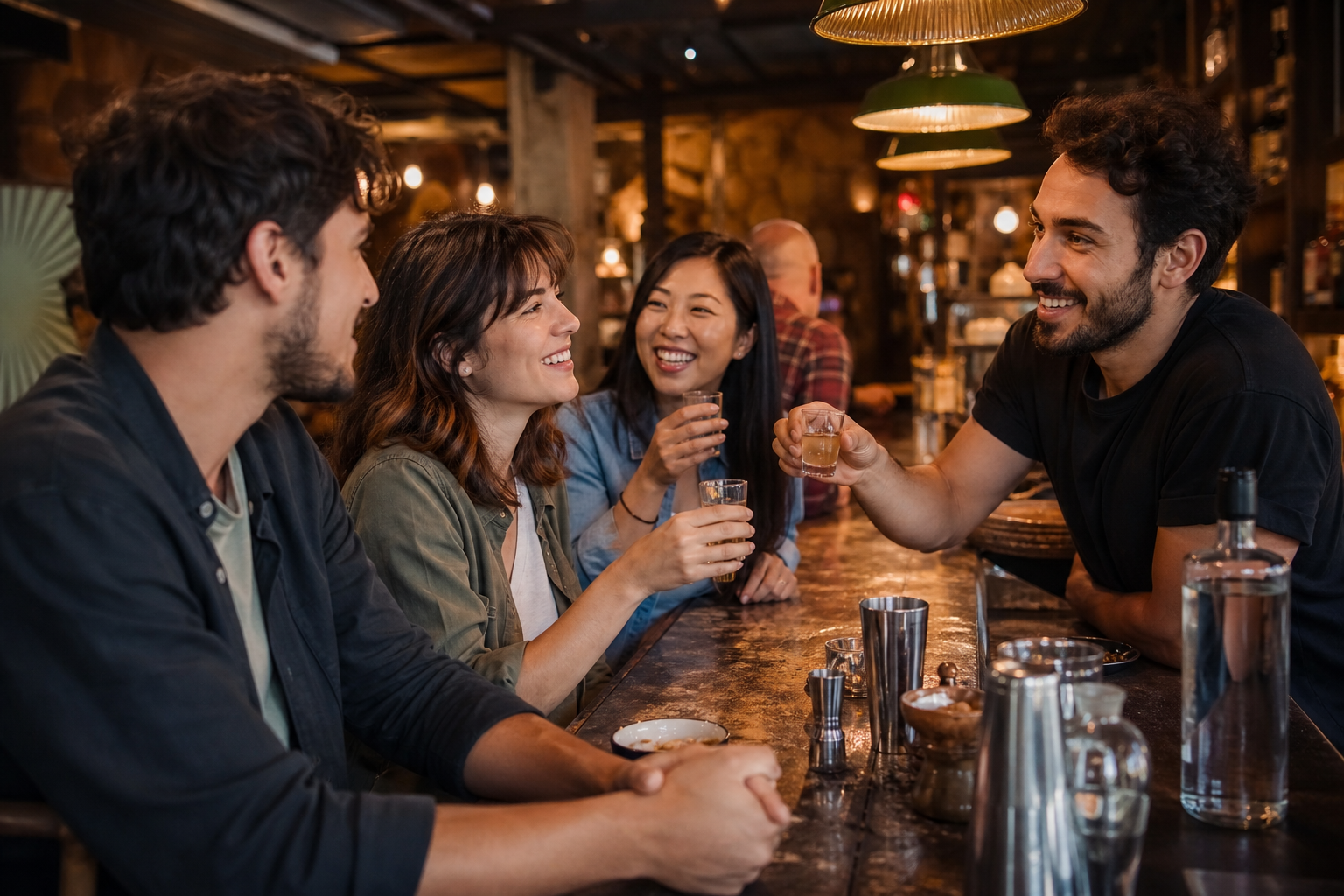
You already know your way around a bar at home, so why does ordering a drink abroad sometimes feel like being the most obvious stranger in the room? The difference between a forgettable tourist night out and a genuinely memorable one usually comes down to a few small decisions: where you go, how you arrive, what you order, and whether you treat the bar as a transaction or a conversation. Exploring local bar culture through travel, rather than defaulting to the nearest TripAdvisor pick, is one of the most reliable ways to actually meet people and understand a place.
This guide is a practical playbook. It covers how to find bars locals genuinely drink in, the etiquette rules that hold up across cultures, how to order and pace yourself without standing out for the wrong reasons, and how to turn even a short exchange with a bartender into something real. It also covers the legal and safety basics that are easy to overlook, and options for lighter drinkers who still want to use bar time as a window into daily life. You can also explore exploring local bar culture through travel.
Drinking Like a Local: How to Experience Authentic Bar Culture on Your Travels
Finding bars locals actually drink in
The easiest signal that a bar is not really for locals is that it sits on the main tourist drag, offers a menu in six languages, and charges three times the local average. The inverse is also true: a handwritten chalkboard menu, a mixed-age crowd, slightly scuffed furniture, and a location one or two streets back from the main square are all good signs you have found somewhere genuine.
Map apps are more useful than their star ratings suggest, but you have to use them differently. Filter by proximity to a residential neighbourhood rather than a landmark, scroll through the photos and look at the glassware and the clientele rather than the interior design, and read reviews written in the local language using the language filter, because those reviewers are usually residents, not tourists. Check the opening hours too, since a bar that does not open until 10pm is probably following local rhythms rather than catering to people on early sightseeing schedules.
The most reliable recommendations still come from people. Ask your hostel receptionist, a café barista, or a rideshare driver, but frame the question carefully. ‘Where do tourists go for drinks?’ will get you one answer. ‘Where would you go for a beer after work?’ gets you a completely different one, and usually a better venue. Shopkeepers and market traders are similarly good sources, particularly in the afternoon before the evening rush.
Timing matters as much as location. Going early on a weeknight lets you get a feel for a bar before it fills up, and it is much easier to spot whether the crowd is mainly locals or a pre-booked pub crawl group. If you walk in and see matching T-shirts and a laminated shot menu, it is perfectly fine to leave. Keep a shortlist of two or three bars in the same neighbourhood so you can move on without having planned the whole evening around one choice.
Universal bar etiquette that travels well
Most bar etiquette crosses borders surprisingly well. Wait your turn, do not click your fingers or whistle at staff, and be patient when it is busy. Getting loudly drunk is frowned upon in most drinking cultures, regardless of what the tourist-bar scene might suggest, and it is almost always the quickest way to mark yourself as someone locals would rather ignore.
Ordering and paying can trip you up in ways that are easy to avoid once you know about them. In some countries you pay per drink; in others a tab is standard. A quick, discreet question to the bartender at the start, ‘Do you run tabs here, or pay as you go?’, takes ten seconds and saves embarrassment. In Spain, the phrase te invito does not mean ‘I invite you’ in the casual sense; it means ‘I am buying’, so using it loosely could leave you footing the bill for a table of strangers. Similarly, in British and Australian pub culture, the round-buying system is taken seriously. If you accept drinks from a group that is buying rounds, you are expected to take your turn, and not doing so can cause genuine offence.
Tipping norms vary widely. In North America it is expected, and skipping a tip reads as a serious slight. In much of Europe and East Asia, tipping is optional or even slightly awkward, though rounding up or leaving small change is a safe middle ground when you are unsure. If in doubt, watch what others do before you pay.
On phones and dress: aim to look reasonably put together without being overdressed, and avoid filming or photographing strangers without asking. Keep phone calls outside. These small things signal to bartenders and regulars that you are paying attention to where you are, which is the fastest route to being treated as a welcome guest rather than a passing nuisance.
The bar counter is the natural place to start a conversation, since it signals openness in most cultures. Begin with the bartender rather than forcing yourself into a group, read body language carefully, and recognise when a polite smile from locals is friendliness rather than an invitation to sit down.
How to drink like a local without becoming ‘that tourist’
The shortest, least expensive item on a menu is often what locals actually order. In a working-class bar in Madrid it is probably a small glass of draft beer; in a Tokyo izakaya it might be a cold beer or a simple highball. The longest, most elaborately described cocktail is frequently designed to appeal to visitors who want a story to tell, not regulars who come back every week.
A low-risk way to try regional drinks without making a fuss is to simply ask: ‘What do people who live around here usually drink?’ or ‘Is there a local beer or spirit you would recommend?’ Bartenders almost always enjoy that question, and it produces far more interesting results than pointing at the house special. Order a single serving first before committing to something you might not enjoy.
One habit that marks travellers as inexperienced across many cultures is shot-tourist behaviour: pushing for rounds of strong shots, starting drinking games, or encouraging others to drink faster or more than they want to. In South Korea, social drinking customs centre on respect and pouring for others rather than competitive consumption, and that kind of pressure reads as juvenile or disrespectful in most cultures, even when it is meant as friendliness.
Pacing is practical as much as social. Alternating an alcoholic drink with water or a soft drink keeps you clear-headed and present, which is the whole point of being there. Decide on a personal limit before you start and stick to it. In many countries, low-alcohol or alcohol-free beers, sodas, and local soft drinks are entirely normal bar orders, so if you want to decline a drink without killing the mood, ‘I am pacing myself tonight’ or ‘Just water for now, thank you’ works in almost any language and raises no eyebrows. Learning the local word for ‘cheers’ before you arrive will never go wrong.
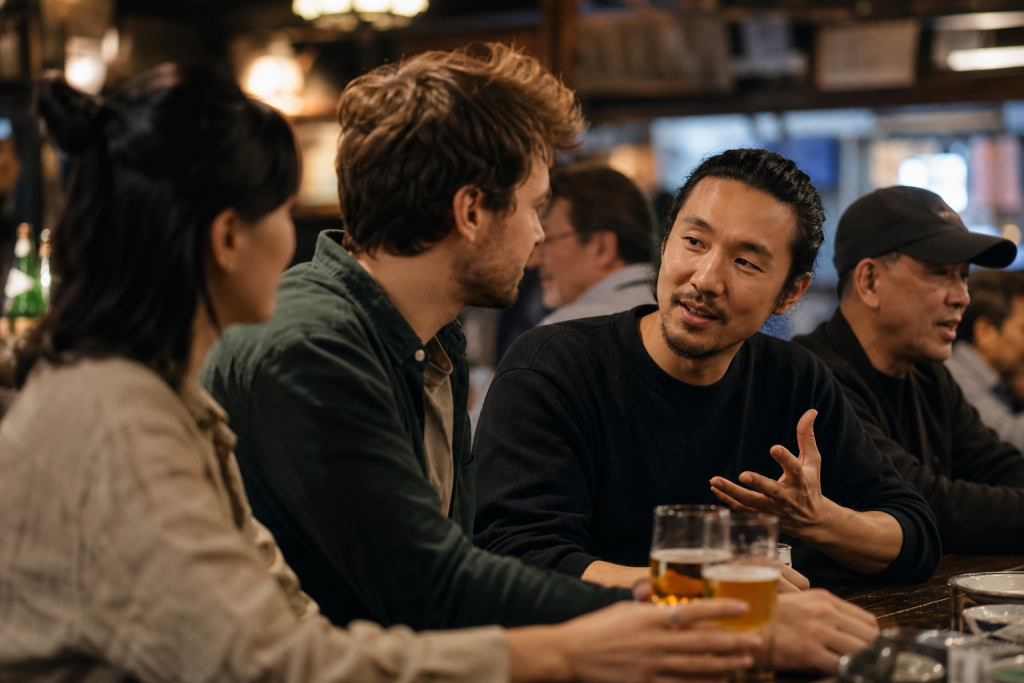
How to drink like a local without becoming ‘that tourist’
Talking to bartenders and regulars, even with a language barrier
Bartenders are the best starting point because talking to them is expected, they are used to brief exchanges with strangers, and a good one will tell you more about a neighbourhood in five minutes than a guidebook will in five pages. A few openers that work consistently: ‘It is my first time here, what would you recommend?’ or ‘If you were not working tonight, what would you order?’ These invite an opinion rather than demanding service, which changes the tone of the whole exchange.
With other regulars, the most reliable conversation starters are things already in the room: a match on the television, the music, something about the bar itself, or a question about the neighbourhood. These are neutral, natural, and easy to exit if the other person is not in the mood to chat. Avoid politics, religion, or anything that requires you to hold a position on local affairs you do not fully understand.
When you do not share a language, a small amount of preparation pays back many times over. Learning five words before you arrive, something like hello, please, thank you, cheers, and one number, is enough to change how locals perceive you. Combine those words with pointing at the menu, a clear yes-or-no question, or an either/or choice, and most transactions become entirely possible. A smile and genuine patience cover the rest.
Respecting limits is as important as opening conversations. A good chat with a bartender does not mean you should monopolise their attention when the bar is busy, and locals talking with their own group are not necessarily ignoring you; they may simply be doing what they came to do. If a conversation ends naturally, let it. If it goes well and feels mutual, you might ask for a nearby venue recommendation. Follow the other person’s lead on social media or contact details, and never push for that yourself.
Local bar culture travel essentials: laws, safety and beyond-the-booze experiences
Before you arrive anywhere, spend ten minutes checking a few legal basics: the legal drinking age and whether bars routinely check identification, rules on drinking in public spaces or parks, and whether there are dry days, dry regions, or restrictions tied to local laws or religious observance. These vary significantly across countries and can catch travellers completely off guard.
Cultural norms around gender are worth thinking about too. In some parts of the world, mixed-gender groups are entirely unremarkable in bars, but a woman drinking alone may attract more attention than she wants. In some traditional drinking contexts, gender roles in social drinking are strictly observed in ways that can surprise visitors unfamiliar with local customs, so knowing this in advance helps you decide where and how to spend your evening. Solo travellers of any gender benefit from sitting near the bar rather than at a corner table, choosing busy and well-lit venues, and trusting their instincts about whether a place feels comfortable.
On personal safety: keep an eye on your drink at all times, avoid leaving with people you have only just met, and save a trusted taxi or ride-hailing app before you start drinking rather than after. Know your route home in advance.
Bar culture does not have to mean alcohol-centred evenings, either. Brewery and distillery tours, wine or sake tastings, neighbourhood bar walks focused on local history or architecture, live music nights, pub quizzes, darts, and pool all offer access to the same social spaces and local rhythms without requiring you to drink heavily, or at all. Many bars in southern Europe and Asia function as social hubs from early evening, serving coffee, soft drinks, and food alongside alcohol, which makes them perfectly accessible to lighter drinkers or anyone who simply enjoys watching daily life unfold over a table.
Turning nights out into real local connection
The goal is not to pass as a local. It is to show enough curiosity and respect that you are welcomed into the space rather than tolerated in it. Small gestures carry more weight than most travellers expect: attempting a few words in the local language, observing how rounds or toasting work before jumping in, asking a genuine question about the neighbourhood rather than just photographing the decor. These things are noticed, and they signal that you are interested in the place rather than simply using it.
A useful frame for each bar visit is to leave with three small things: one new custom you observed, one local phrase you practised, and one neighbourhood tip you picked up from someone who lives there. That sounds modest, but over a week of travel it adds up to a genuinely richer picture of a place than any itinerary provides.
Before your next trip, try a simple pre-arrival checklist: research one local drinking area or bar district, one regional drink worth trying, one etiquette detail specific to that country, and one bar-based activity that does not revolve entirely around alcohol. Then be ready to abandon all of it based on what you actually see when you arrive. Flexibility is the real skill.
And when you get something wrong, as you will occasionally, the recovery is simple. Stay calm, stay polite, and if possible, acknowledge the mistake with a smile. Travellers who are respectful and good-humoured about their errors are almost always forgiven quickly. The ones who are remembered badly are those who were loud, demanding, or indifferent to the place they were in.
