

Two weeks is just enough time to see the best of three countries without rushing every morning. This southeast asia itinerary 2 weeks moves from Bangkok through the temples of Cambodia and down Vietnam, ending at Ha Long Bay. It follows one smooth line east, so you spend your days exploring rather than backtracking, and it mixes cities, history, food, and nature in a balanced way.
If this is your first trip to the region, this route is a gentle introduction. Thailand is easy to travel in, Cambodia adds wonder and depth, and Vietnam brings energy and memorable scenery. You will eat well everywhere and see how different these three neighbours are.
Why This Route Works So Well
The thailand cambodia vietnam route works because it moves in one direction. You start in Bangkok, cross into Cambodia, then enter southern Vietnam and travel north to Hanoi. Each crossing brings a change of scenery and food, which keeps the trip exciting. A few days in Thailand, three days in Cambodia, and a week in Vietnam give each country time to make an impression.
Days 1 to 3: Bangkok, Thailand
Begin in Bangkok, a city that rewards curiosity. Spend your first day around the old city, visiting grand temples, walking beside the river, and tasting street food from small stalls. The Grand Palace and the Temple of the Emerald Buddha are the classic starting point, while Wat Pho offers a calmer visit nearby. In the evening, take a river boat or walk through a night market.
On your second day, wander through Chinatown and visit a canal neighbourhood. Your third day can be slower: revisit a favourite area, enjoy a long lunch, and watch the sunset from a rooftop viewpoint.
Days 4 to 6: Siem Reap and Angkor, Cambodia
From Bangkok, travel to Siem Reap, the gateway to Angkor. Start with Angkor Wat at sunrise, when the towers are reflected in the water. Then explore Angkor Thom, with its smiling stone faces, and Ta Prohm, where huge trees grow through the ruins. Each temple has its own character.
Give your second day to Banteay Srei, known for its fine pink stone carvings, and enjoy the old market in the evenings. On your third day, visit the floating villages on Tonle Sap lake.
Day 7: Phnom Penh and the Journey South
Phnom Penh is a city of wide riverside boulevards and golden rooftops. Spend a day at its museums and memorials, then walk along the riverfront and visit the Royal Palace. From here, cross into southern Vietnam by bus or by boat along the Mekong River. By evening, you will be in Ho Chi Minh City.
Days 8 to 9: Ho Chi Minh City and the Mekong Delta
Ho Chi Minh City is fast, loud, and full of life. Motorbikes fill the streets, markets overflow with fruit and flowers, and the food is among the best in the country. Spend a day in the historic centre, then enjoy the street food scene in the evening. The city is also a good base for a day trip to the Cu Chi Tunnels.
On your second day, take a trip into the Mekong Delta. Travel by boat through narrow canals shaded by coconut palms, visit floating markets, and taste fresh tropical fruit.
Days 10 to 11: Hoi An and Da Nang, Central Vietnam
Fly north to Da Nang and head for Hoi An, one of the most charming towns in Southeast Asia. Its old town is a maze of lantern-lit streets, yellow walls, and riverside cafes. By day, wander the old houses and temples, and cycle to the rice fields or the beach. At night, the lanterns come on and the river glows.
A good vietnam itinerary always makes time for central Vietnam, because the food, the coast, and the history here are distinct. Use your second day for the Marble Mountains or the ruins of My Son, then return to Hoi An for a relaxed evening by the river.
Days 12 to 14: Hanoi and Ha Long Bay
Finish in the north. Hanoi is cooler and more traditional than Ho Chi Minh City, full of lakes, old streets, and quiet temples. Spend a day wandering the Old Quarter and tasting northern dishes, from steaming noodle soup to crisp spring rolls. Visit Hoan Kiem Lake at dawn.
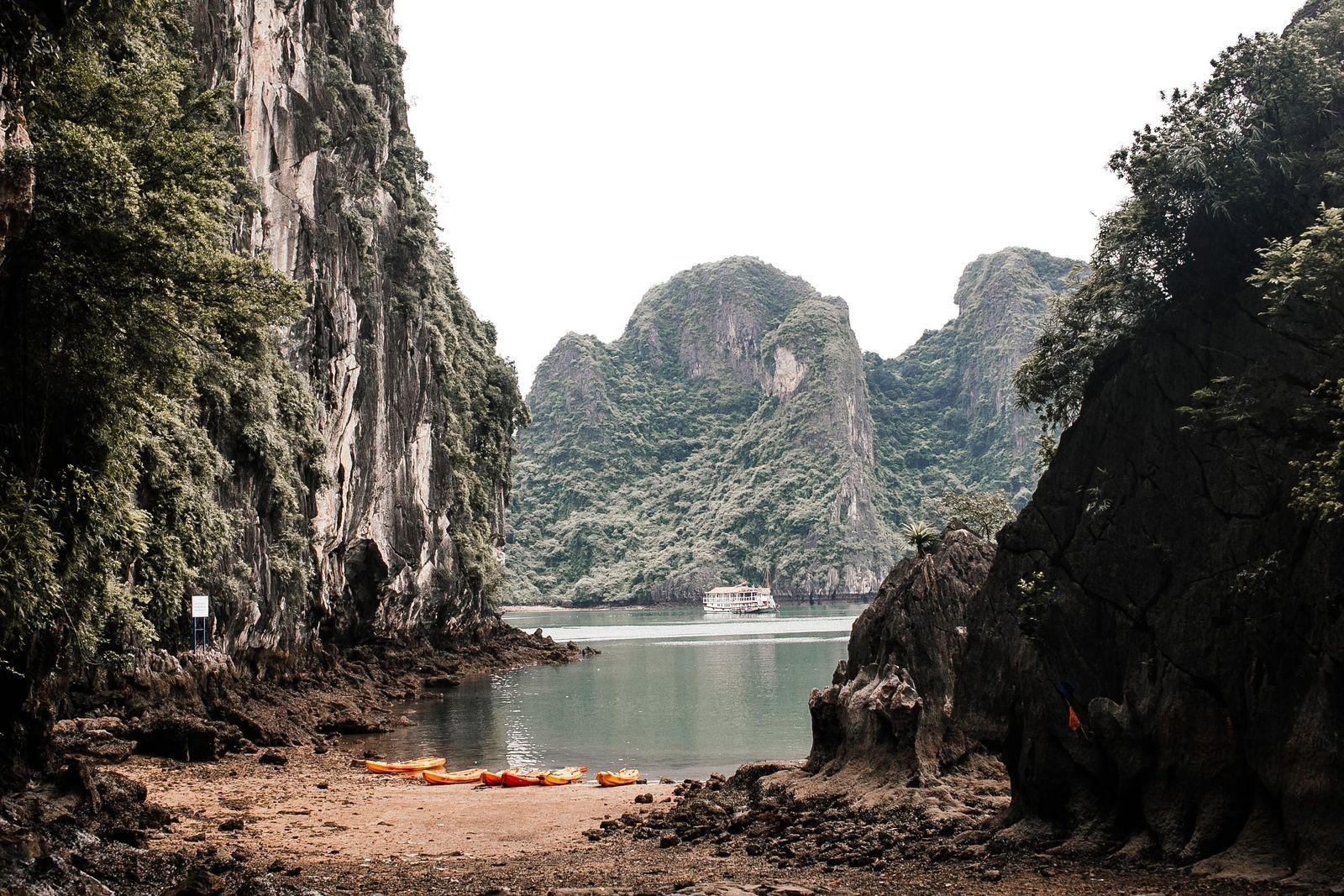
Save the highlight for last: Ha Long Bay. A cruise takes you past limestone islands rising from green water and through caves. You can kayak between the karsts or watch the light change from the deck as the sun sets. Return to Hanoi on your last evening for a farewell dinner.
Practical Tips for Planning Your Trip
Check the entry rules for each country before you travel, and make sure your passport has enough validity for the whole trip. For Vietnam, the e-visa is valid for up to 90 days, with single or multiple entry options, which gives you plenty of flexibility. Travellers can apply on the official portal evisa.gov.vn or through an agency, and many visitors arrange it with help so the details are checked in advance. For support with your application, you can turn to VietnamVisaEasy. The pre-arrival declaration is encouraged, not mandatory, but completing it in advance can make your arrival smoother.
Pack light, and choose clothes for hot and humid weather, with a light layer for cooler evenings in the north. Comfortable walking shoes are essential. Book your first nights in advance, but leave room to stay longer in a place you love.
This southeast asia itinerary 2 weeks is a framework, not a fixed rule. If you love temples, spend an extra day in Siem Reap. If the beach calls you, linger in Hoi An. If you want more time in Hanoi, shorten the south by a day. The route is forgiving, and the best trips leave room for a slow morning, an unplanned detour, or a long lunch with new friends.
This journey gives you three countries, ancient wonders, and one of the most beautiful bays in the world, all in fourteen days. Travel slowly where you can, and let each place surprise you. By the time you watch the sun set over Ha Long Bay, you will understand why so many travellers return to Southeast Asia again and again.
