

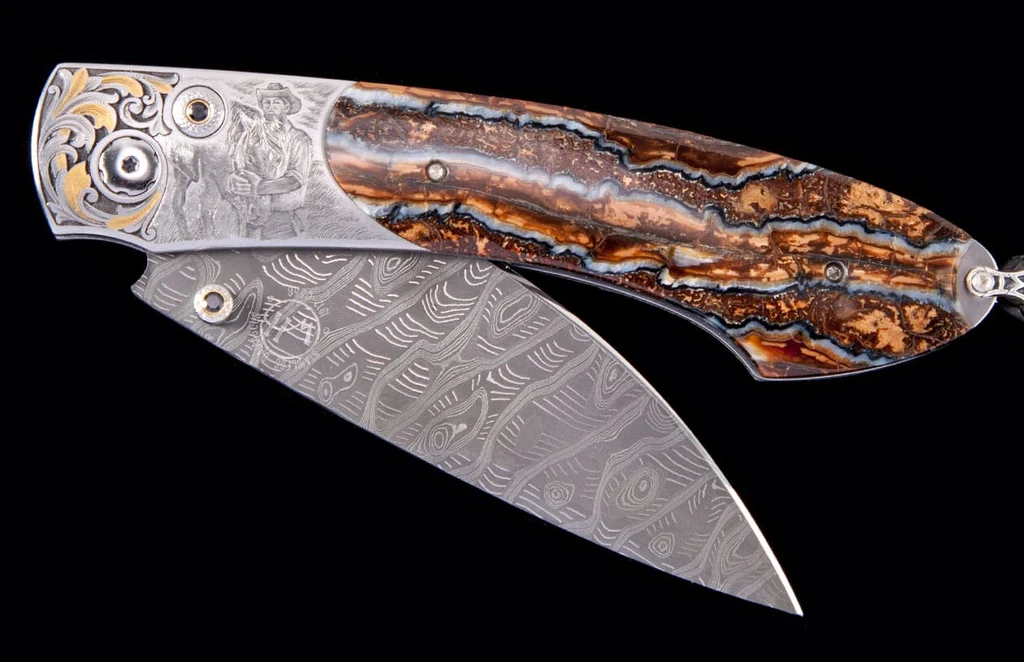
A knife blade can be functional without a flashy appearance, yet certain designs successfully blend distinct character with superior craftsmanship. Cowboy knives traditionally command attention with their signature Western profiles and rugged aesthetic. When these familiar forms merge with the flowing patterns characteristic of Damascus steel, the result is a captivating interplay between frontier-style design and modern metalworking techniques.
What makes this compelling is not merely the eye-catching, patterned steel, but how the choice of material transforms the character of a familiar object. Cowboy knives can range from understated and traditional to highly decorative, depending on the combination of blade, handle, finish, and overall proportions.
Cowboy Knives Find a New Identity in Patterned Steel
Traditional Western styles often prioritize form over ornamentation. Recognizable handles, balanced proportions, and straightforward blade profiles establish a design’s identity without the need for elaborate decoration. This simplicity creates an intriguing contrast when knifemakers employ materials with complex visual textures.
Damascus knives feature patterns created through specialized steel-working processes. In many modern examples, various steel types are forge-welded into layers, then manipulated and finished to reveal flowing lines. The final appearance may resemble water ripples, waves, or intricate grain patterns, turning the blade itself into a key element of the visual experience.
On a cowboy knife, these patterns can shift the perception of the entire design. A traditional handle can take on a more contemporary feel when paired with a blade surface featuring flowing, patterned lines. At the same time, familiar Western forms maintain the knife’s connection to its historical roots.
Some designs highlight the steel as the focal point, utilizing simple handles to avoid visual clutter. Others combine patterned blades with intricate carvings or contrasting materials. The finest examples allow each element to contribute effectively without dominating or overwhelming the overall design.
What Makes Damascus Patterns So Captivating?
Patterned steel appeals to many because it transforms the manufacturing process into a tangible design feature. Rather than presenting a uniform surface, these blades reveal lines formed during their construction and finishing. These patterns lend the material strong visual appeal, even before one considers the object’s primary function.
However, the term “Damascus” requires careful interpretation. While historical Damascus steel is linked to specific metallurgical traditions, many modern “Damascus” knives actually utilize pattern-welded steel. This modern technique involves fusing layers of steel and manipulating them to create the distinctive surface patterns long associated with the name.
In cowboy-style knives, such visual details can add a unique touch of character to a traditional format. Two blades might share similar proportions yet look vastly different due to variations in steel patterns, handle materials, and finishes.
Patterns should not be the sole benchmark for craftsmanship or performance. A complex surface pattern may be visually stunning, but structural integrity ultimately depends on steel quality, proper heat treatment, blade geometry, and meticulous manufacturing. Surface appearance is just one part of the story, not the whole picture. Understanding this distinction allows us to properly appreciate patterned steel as a fusion of materials science and artistry.
The Handle Is a Crucial Element of the Knife
While the blade’s pattern may be the first thing to catch the eye, the handle plays a significant role in defining the knife’s design. Material, shape, texture, and finish all influence both the visual appeal and the tactile experience of holding the knife. A blade with an intricate pattern can be paired with a simple wooden handle to create contrast, whereas a dark-colored handle can heighten the dramatic effect.
In the realm of cowboy-style knives, handle choices often bridge contemporary craftsmanship with traditional Western character. Natural wood can showcase unique grain patterns, whereas modern synthetic materials offer more uniform colors and textures. While decorative materials can create a luxurious visual impression, the quality of the fit and finish remains the deciding factor.
The relationship between the handle and the blade is crucial. If the two elements compete for attention, the design can appear visually cluttered. Conversely, when their features complement one another, the knife feels more harmonious and well-conceived.
This balance explains why the most effective designs do not necessarily feature the most decorative elements. A handle with a simple yet elegant design, patterned steel with a clean finish, and consistent proportions can yield a piece with stronger character than a combination of disjointed visual effects.
A well-designed object feels cohesive because every component supports a unified concept. This principle applies equally to traditional Western styles and contemporary custom craftsmanship.
Craftsmanship: Beyond Mere Visual Appeal
The allure of Damascus steel can sometimes lead people to focus solely on surface patterns. However, a knife’s performance and durability depend heavily on technical decisions that may no longer be visible once the manufacturing process is complete. Steel composition, heat treatment, geometry, assembly, and final inspection all influence the quality of the finished product.
For cowboy-style knives, consistency is paramount, especially when the maker blends traditional forms with decorative materials. A beautiful blade requires a clean finish, precise construction, and a meticulously fitted handle; captivating surface details cannot mask poor assembly quality. Different types of steel require different maintenance. Carbon steel can develop a patina and demands special attention regarding moisture, whereas stainless steel generally offers superior corrosion resistance. Actual performance depends heavily on the specific alloy and manufacturing process; thus, a generic label is insufficient to judge the quality of a blade.
Patterned steel does not automatically make a knife harder, sharper, or more durable than a plain steel alternative. These qualities depend largely on design and production methods. A high-quality plain steel blade can be an exceptional product, just as a patterned blade can be disappointing if poorly crafted.
For buyers, an honest description of materials and construction is far more valuable than exaggerated claims about a knife’s pattern or finish.
Tradition and Contemporary Design Can Blend
The best modern interpretations of Western-style knives need not replicate historical examples in every detail. These knives can retain a familiar silhouette while experimenting with new finishes, materials, and manufacturing processes. This approach allows “Cowboy-style” knives to remain instantly recognizable while giving makers room to express their own ideas.
One maker might prefer an understated design where the handle and blade follow traditional proportions. Another might use striking patterned steel to create a more artistic look. Both can draw inspiration from the same Western influences yet appeal to different audiences.
This versatility is part of what makes the category so compelling. It allows historical inspiration to serve as a starting point rather than a rigid set of rules. The result can feel rooted in tradition without appearing to be an exact reproduction of designs from the past. Damascus knives are highly relevant to this discussion because the steel itself serves as a visual record of the choices made during its creation. The patterns introduce elements of movement, contrast, and texture to a form that might otherwise rely solely on a familiar silhouette.
This combination also highlights two facets of craftsmanship. A knife can be appreciated as a design object, yet its creation must still prioritize material and construction. Artistic appearance and practical quality should complement and reinforce one another.
Distinct Western Character
Not every admirer of Cowboy knives is looking for the same thing. Some prefer the plain appearance of traditional ranch-inspired designs, while others value intricate surface patterns and contemporary finishes. There is room for both because the category is defined by a broader design influence rather than one mandatory appearance.
Patterned steel adds visual depth without erasing the qualities that make Western styling distinctive. The handle can retain its traditional character, the proportions can remain familiar, and the blade can introduce a modern element that makes the entire piece feel new.
The lasting appeal comes from that contrast. Steel becomes more than a neutral surface, and a traditional silhouette becomes a place where material experimentation can be seen and appreciated.
Ultimately, the most successful Cowboy knives bring their details together with purpose. The pattern should complement the shape, the handle should suit the overall design, and the construction should support the quality of the presentation. When those elements work together, the result feels less like decoration added to an ordinary object and more like craftsmanship expressed through steel.
