

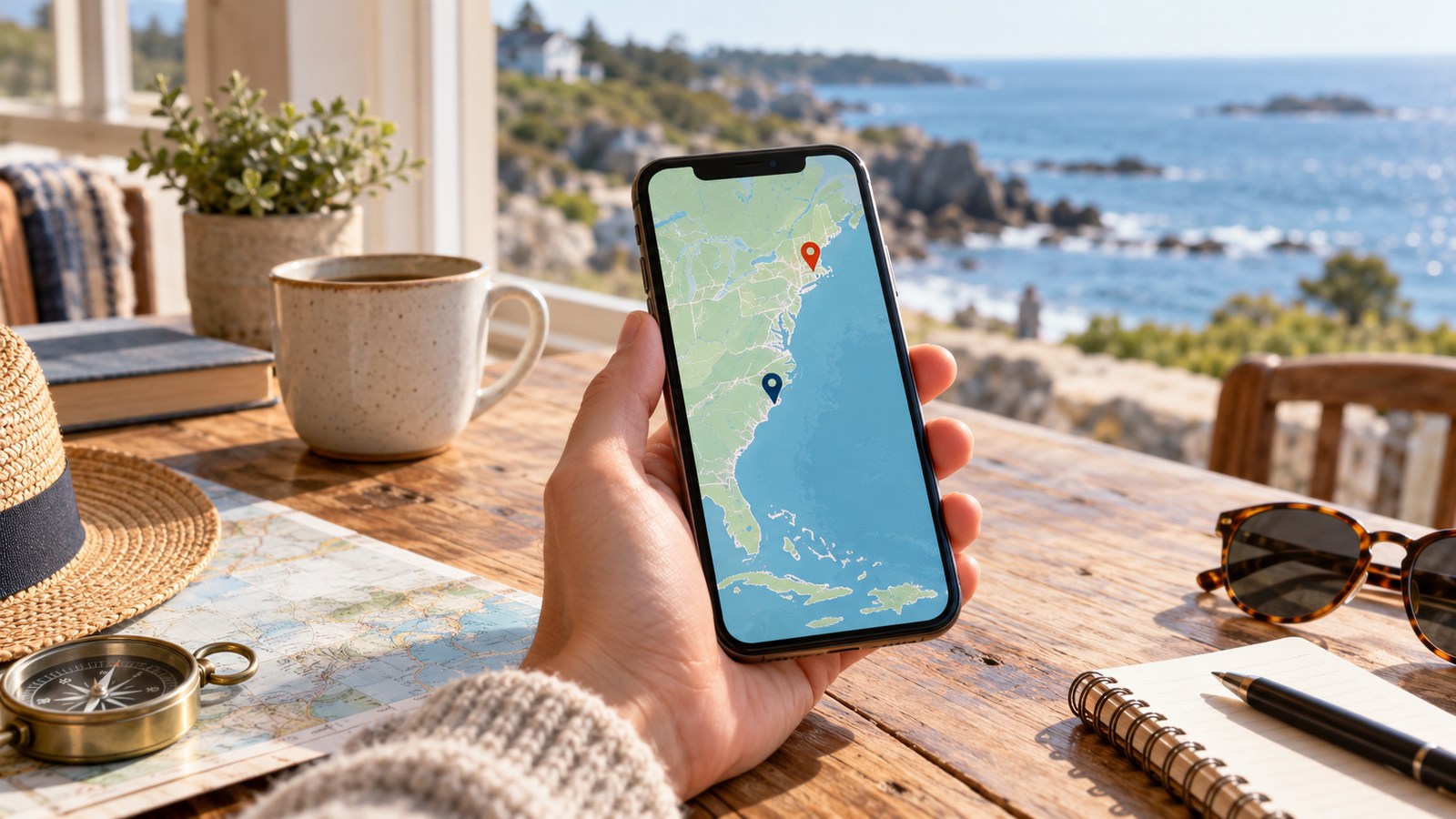
Two people can save the same beach on their phones and still spend twenty minutes looking for each other. One heads for the marker in the middle of the sand. The other waits where the bus dropped them off. On South Korea’s east coast, a better trip map starts with one small change. Save the spot where you will do something, whether that means getting off a train, picking up a bag or meeting someone for lunch.
Gangneung and Yangyang make a good trial run for this approach. You might arrive by train in Gangneung, stay near the water and then move north to Yangyang for a second night. Here is how to build a map for that trip that works in English, in Korean and in the hands of a friend joining halfway through.
Give each place two names and a job
Open a map app before you travel. Naver Map is one option. The Korea Tourism Organization’s app guide lists English support, bookmarks and route planning for public transit and walking. Create a short list for each overnight stop. In a separate phone note, put the Korean and English names on the same line, followed by a few words about what you will do there.
For example, “Gyeongpo Lake / 경포호 / morning walk” is a good heading. The pin underneath should mark the point where you plan to join the lakeside path. Add a second line for the agreed finish if someone will be collecting you. A friend who reads no Korean can recognize the English label. Someone helping with directions can read the original spelling without taking a guess at your pronunciation.
Trace the part between the pins
Try this with the journey from Gangneung Station to Anmok Beach, home to Gangneung Coffee Street. Save the station, the public entrance you intend to use at the beach and the café you want to try. Look up the first leg using public transit, then switch to walking directions for the distance between your arrival stop and the café door. Give a friend that door as the meeting point.
Check the reverse journey separately. A return bus may board across the road or on another street. If you have a reserved train to catch, save the departure stop for the return journey while you still have time to inspect the map. Take a screenshot wide enough to include a crossing or a named side street. A close-up showing only a bus icon is surprisingly hard to use when you are standing at street level.
Keep appointments in the right town
Lists also need somewhere to put services that come to you. Say you are staying in Gangneung and considering an evening massage. A page labeled 강릉출장마사지 refers to mobile massage in Gangneung. Keep the page in your trip note and send the provider your lodging address to check coverage. For the map, save the entrance where your accommodation allows visitors to meet you.
When you move to Yangyang, start a fresh list with the new accommodation at the top. The equivalent local service term is 양양출장마사지. The changed first two Korean syllables name the town. Copy your second night’s address from the reservation when making an inquiry. That small habit avoids recycling yesterday’s address just because it is the first suggestion in your phone.
Test the map with an actual rendezvous
Choose Naksan Beach for the test. It stretches toward Naksanhang Port at one end, with Naksansa Temple on the mountain behind the port. Three people who type “Naksan” could have three different afternoons in mind. Agree on a specific café entrance or an identifiable public sign near your chosen stop. Add a meeting time, a photo if you have one and a sentence about where to wait if it rains.
Then send the pin to one travel companion and ask them to open it on their own phone. Can they see the entrance and the nearest road? Can they copy the Korean name? If the answer to either question is no, send the plain-text address as well. A small screenshot beside the address is especially handy when the two of you use different map apps or one person has yet to set up mobile data. If you are meeting after dark, choose a spot you can recognize from the street even when the business behind it has closed.
Before leaving for the day, open your return ticket, your lodging address and the last screenshot you took. Those three items should be easy to find without searching through a group chat. Check live departures when you travel, since an image saved the night before can only tell you what the schedule said then.
You can judge a finished map by handing it to the least involved planner in the group. Ask where you are meeting after coffee in Gangneung and where the bags go tomorrow in Yangyang. If they can answer both without handing the phone back, close the map. The rest of the coast is quite pleasant to explore with your eyes up.
