

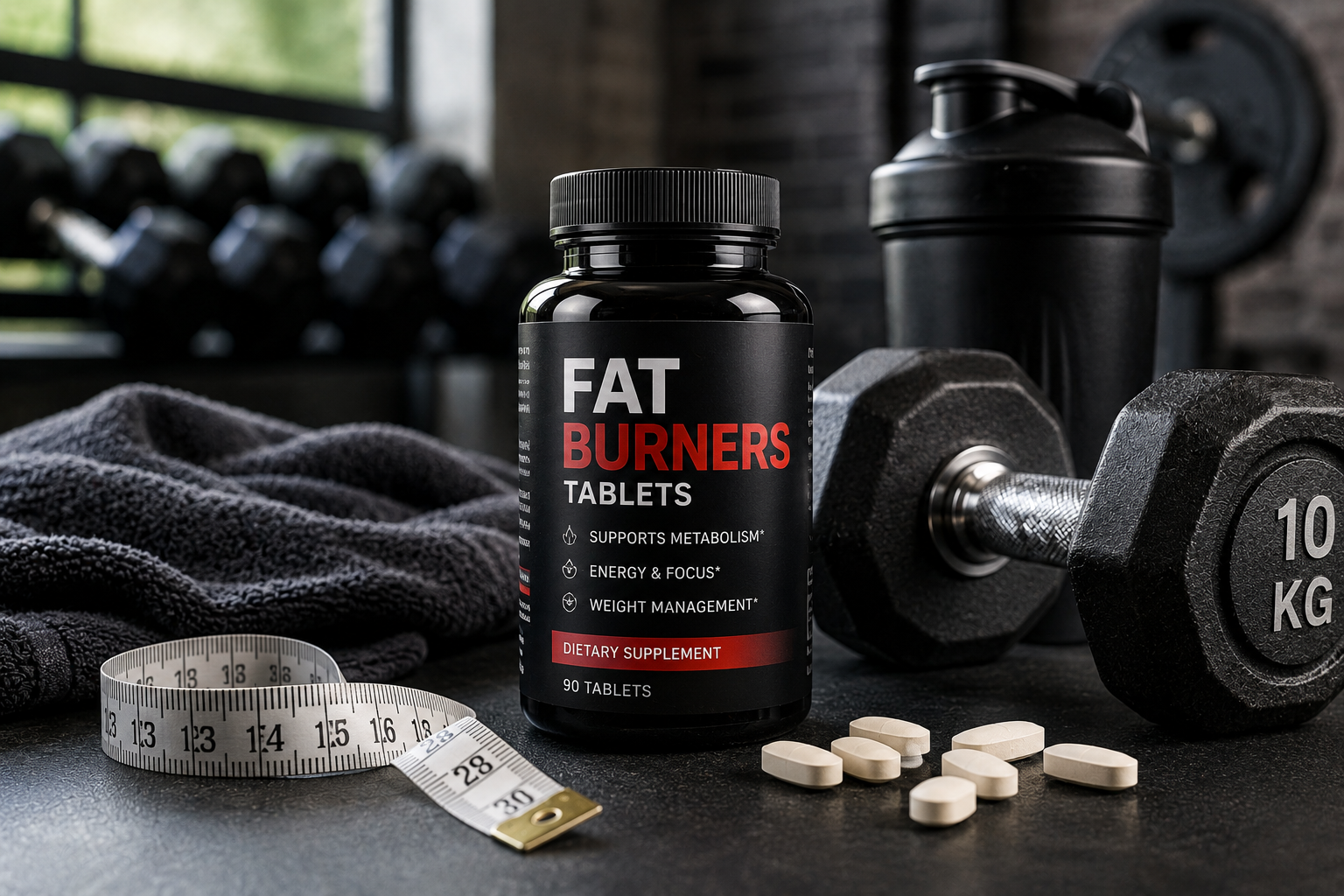
Cutting phases are an important part of many physique and performance programmes. Whether the objective is improving definition, reducing body fat, or presenting a more conditioned physique, successful cutting requires more than simply reducing calories and increasing training volume.
The most effective approach is built around several factors working together. Nutrition, resistance training, recovery, energy management, hydration, and consistency all influence how successfully an athlete can improve body composition while maintaining performance.
As athletes become more deliberate about their cutting strategies, interest has also grown around products and performance-support categories that are commonly associated with energy, focus, metabolism, and body composition. However, these should always be considered within the context of the broader programme rather than treated as a replacement for its fundamentals.
Understanding the Purpose of a Cutting Phase
A cutting phase generally focuses on reducing body fat while preserving as much lean muscle and training performance as possible.
Creating a calorie deficit is central to this process, but the size of that deficit matters. Cutting calories too aggressively can lead to declining energy, reduced training quality, increased hunger, and difficulty maintaining the programme.
A structured approach allows changes in body composition to happen gradually while giving the athlete a better opportunity to maintain strength and muscle.
This is particularly important for experienced athletes who have already spent considerable time developing their physique.
Body Composition Is More Than Bodyweight
Bodyweight is useful, but it does not tell the complete story.
Two athletes can have identical bodyweights while having completely different levels of muscular development and body fat. Water retention, glycogen levels, food intake, and other short-term variables can also create significant fluctuations on the scale.
For that reason, progress should be evaluated using several measurements.
Weekly bodyweight averages, waist measurements, progress photographs, gym performance, and overall recovery can provide a much more reliable picture than a single daily weigh-in.
This broader approach also helps prevent unnecessary changes when normal fluctuations are mistaken for stalled progress.
Training for a Leaner Physique
Resistance training remains one of the foundations of a successful cutting phase.
When calorie intake is reduced, maintaining an effective training stimulus becomes increasingly important. The objective is not necessarily to add more and more volume, but to maintain quality, productive intensity, and consistency.
Compound movements can continue to form the foundation of a programme, supported by appropriate accessory exercises and sensible workload management.
Training should also account for recovery.
A calorie deficit can reduce an athlete’s ability to recover from high workloads, meaning that additional training is not automatically better.
The most productive cutting programme is one that provides enough stimulus without creating unnecessary fatigue.
Nutrition Sets the Direction
Nutrition determines much of the direction of body composition.
Protein intake is particularly important during a cutting phase because maintaining adequate protein supports the preservation of lean tissue. Carbohydrates can support training performance and energy availability, while dietary fats remain an important part of a balanced nutritional strategy.
Food quality matters, but sustainability matters just as much.
An extremely restrictive diet may produce rapid initial changes, but maintaining it can become increasingly difficult as hunger, fatigue, and training demands accumulate.
A moderate and consistent approach can therefore be more effective over the entire duration of a cutting phase.
Managing Energy During a Cut
Energy management becomes increasingly important as a diet progresses.
Reduced food intake can affect concentration, training performance, mood, and everyday productivity. This is especially relevant for athletes who combine demanding training schedules with work and other responsibilities.
Rather than continually reducing calories whenever progress slows temporarily, it is useful to examine the entire situation.
Has body weight actually plateaued?
Has training performance changed?
Is recovery adequate?
Has adherence remained consistent?
Answering these questions provides a much better basis for decision-making than making immediate and increasingly aggressive adjustments.
The Role of Supportive Categories
The modern performance market includes a wide range of products marketed around body composition, energy, focus, and training support.
The Fat Burners category represents one area athletes may encounter when researching different approaches to cutting and body-composition management.
However, products in this broader category can have very different ingredients and mechanisms. They should therefore not be treated as interchangeable.
The important distinction is between supporting an established programme and expecting a product to create the result by itself.
A calorie-controlled diet, structured resistance training, adequate protein, and recovery remain the foundation.
Energy and Focus During Demanding Phases
Energy and mental focus can become significant challenges during prolonged cutting phases.
Lower calorie intake combined with demanding workouts can leave athletes feeling less energetic, particularly when sleep and recovery are also compromised.
This is one reason products associated with energy and focus frequently appear in discussions surrounding cutting strategies.
For example, Modafinil is a prescription medicine rather than a conventional fat-loss supplement, and its use involves medical considerations that are very different from those associated with ordinary nutritional products. Anyone considering prescription medicines for energy, focus, or body-composition purposes should discuss their suitability with a qualified healthcare professional rather than treating them as general-purpose performance products.
This distinction is important because different products can carry very different risk profiles.
Recovery Becomes More Important as the Diet Progresses
Recovery is often underestimated during cutting.
As calorie intake falls, the body has fewer resources available for training and recovery. If training volume remains extremely high while nutrition and sleep deteriorate, fatigue can accumulate quickly.
Sleep should therefore remain a priority.
Hydration, rest days, appropriate training volume, and stress management can also help maintain performance throughout a demanding phase.
An athlete who continually adds training while reducing recovery opportunities may eventually find that performance moves backwards rather than forwards.
Hydration and Body Weight Fluctuations
Hydration can significantly influence short-term body weight.
An athlete may see the scale move substantially over a few days without experiencing a corresponding change in body fat.
Carbohydrate intake, sodium intake, hydration, digestive contents, and training can all influence these fluctuations.
This is another reason weekly trends are more useful than individual measurements.
Attempting to manipulate hydration simply to create a temporary change in appearance can also create unnecessary health risks.
Long-term body composition should remain the primary objective.
Avoiding the More-Is-Better Approach
One of the biggest mistakes during a cutting phase is responding to every slowdown by doing more.
More cardio.
More training.
Fewer calories.
Less recovery.
Eventually, these changes can create a cycle where fatigue increases faster than meaningful progress.
A smarter approach is to make the smallest adjustment necessary.
If body composition is already changing at a sustainable rate, there may be no reason to make a major change.
If progress has genuinely stalled for several weeks, one variable can be adjusted while the rest of the programme remains stable.
This creates a much clearer picture of what actually works.
Preserving Muscle While Reducing Fat
For most athletes, the goal of cutting is not simply to become lighter.
The objective is generally to improve the ratio between lean tissue and body fat.
That makes muscle retention particularly important.
Resistance training and adequate protein intake provide two important foundations for maintaining lean tissue during a calorie deficit.
Rapid weight loss may appear attractive, but losing substantial lean mass can undermine the final physique outcome.
A slower and more controlled approach may therefore produce a better overall result.
Measuring Progress Correctly
Successful conditioning requires objective measurement.
Useful indicators include:
- Weekly average bodyweight
- Waist measurements
- Progress photographs
- Strength and training performance
- Recovery quality
- Sleep
- Energy levels
- Dietary consistency
No single measurement should determine the entire strategy.
For example, a temporary increase in body weight does not necessarily mean fat has been gained, just as a sudden decrease does not necessarily represent meaningful fat loss.
Looking at several weeks of information creates a more reliable basis for decisions.
When a Cutting Strategy Needs Adjustment
A cutting phase should not continue indefinitely without reassessment.
Persistent fatigue, declining performance, poor sleep, excessive hunger, difficulty concentrating, or deteriorating recovery can all indicate that the current strategy needs to be reviewed.
The purpose of conditioning is to improve body composition while maintaining a functioning and sustainable training system.
If health or general wellbeing begins to deteriorate, those concerns should take priority over achieving a particular physique target.
Building a Smarter Conditioning Strategy
A successful cutting programme can be viewed as a system rather than a collection of individual tactics.
Training provides the stimulus.
Nutrition creates the direction for body-composition change.
Recovery allows adaptation.
Hydration supports normal performance.
Monitoring provides the information required to make adjustments.
Products and supplements sit further down the hierarchy.
When the fundamentals are already working, additional support may have a place depending on the individual’s circumstances. When the fundamentals are missing, adding more products rarely solves the underlying problem.
Long-Term Performance Matters
A successful cutting phase should also fit into the athlete’s wider development.
After reaching a desired level of conditioning, the next objective may be maintaining body composition, increasing performance, or transitioning into another structured training phase.
This is why extreme short-term approaches can be problematic.
A strategy that produces impressive results for a few weeks but leaves the athlete exhausted and unable to maintain the outcome is not necessarily a successful long-term strategy.
Consistency creates more value than constantly searching for a faster solution.
Final Thoughts
Effective cutting is ultimately about managing several variables at the same time.
Reducing body fat while preserving muscle and performance requires appropriate nutrition, structured resistance training, adequate recovery, hydration, and consistent monitoring.
The growing range of performance-support products can make the process appear more complicated than it needs to be. The fundamentals remain the same.
Build the training foundation first. Establish sustainable nutrition. Manage recovery. Track meaningful trends. Then make measured adjustments based on actual progress.
That approach creates a more sustainable path toward improved body composition and provides a stronger foundation for continued performance development.