

Extended home winning streaks naturally draw market attention, often creating a psychological assumption that familiar surroundings guarantee continued success. During the 2013/2014 French Ligue 1 campaign, several clubs assembled formidable runs at their home grounds, turning their stadiums into statistical fortresses over multi-month stretches. However, blindly backing a team purely because they have won five or six consecutive matches at home overlooks the underlying mechanics that sustain performance, including shot quality distribution, schedule sequencing, and the inevitable compression of market value that accompanies public momentum.
The Structural Anatomy of Extended Home Winning Streaks
A home winning streak is rarely sustained solely by vocal crowd support; it requires repeatable tactical advantages that translate into consistent box dominance. In French top-flight football during this period, successful home sides leveraged familiar pitch dimensions, aggressive opening tempos, and elevated pressing lines to force visiting opponents into deep defensive shells early in contests. By converting territorial pressure into opening goals, these teams forced visiting managers to abandon conservative game plans, creating the transition spaces necessary to secure multi-goal victories.
When a team consistently wins the territorial battle and limits high-danger counter-attacks, home dominance reflects genuine structural superiority. However, when victories are achieved despite conceding numerous chances or through late individual heroics, the resulting streak is fundamentally fragile and prone to sudden termination against well-organized opposition.
Identifying 2013/2014 Ligue 1 Home Strongholds
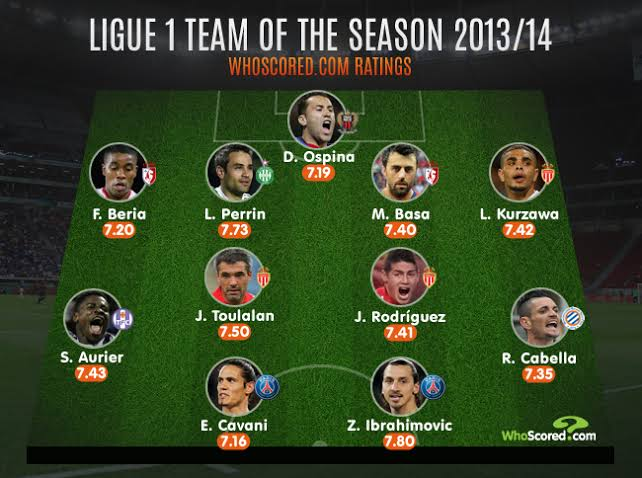
Examining the domestic landscape of the 2013/2014 season highlights stark differences between sustainable home dominance and variance-inflated streaks. While Paris Saint-Germain and AS Monaco possessed the high-end talent to overwhelm visitors over thirty-eight rounds, clubs like Lille OSC and AS Saint-Étienne relied on rigid defensive structures and low-event game management to compile lengthy unbeaten and winning stretches at home.
The data below outlines the home records, defensive metrics, and underlying performance sustainability for the most prominent home performers during that Ligue 1 campaign.
| Club | Home Record (W-D-L) | Home Goals For / Against | Clean Sheets at Home | Longest Home Win Streak | Underlying Performance Driver |
| Paris Saint-Germain | 15–3–1 | 51 / 13 | 9 | 7 Matches | Relentless final-third pressure and individual finishing |
| AS Monaco | 12–5–2 | 30 / 14 | 9 | 4 Matches | Pragmatic control and efficient defensive rest-structures |
| Lille OSC | 13–4–2 | 26 / 10 | 12 | 6 Matches | Elite goalkeeping form and compact low-block discipline |
| AS Saint-Étienne | 12–4–3 | 33 / 14 | 10 | 5 Matches | High-intensity wide pressing and set-piece execution |
This distribution illustrates that beyond the financial dominance of Paris Saint-Germain, teams like Lille and Saint-Étienne built formidable home records through defensive organization rather than runaway scoring. Their extended winning stretches were characterized by narrow 1–0 and 2–0 results, emphasizing that backing these teams required accepting minimal margins of error throughout ninety minutes.
The Mechanism of Market Value Erosion During Long Streaks
As a winning streak extends across several matchweeks, public perception inevitably inflates the team’s perceived probability of victory. Oddsmakers adjust to this retail accumulation by systematically trimming the moneyline price and deepening the handicap margins on the home favorite. Consequently, by the fifth or sixth match of a streak, the available odds no longer reflect fair mathematical probability, shifting the expected value heavily toward the opposing side.
In situations where a mid-table side reaches the peak of its domestic streak while facing an opponent that matches up well tactically against their direct buildup play, monitoring how these compressed prices are presented on a mainstream betting platform—specifically เว็บแทงบอล—clarifies when the market has fully priced out any actionable margin on the favorite, indicating that the mathematical edge has flipped toward taking the points with the visitor.
Key Indicators That Signal an Imminent Home Streak Collapse
Determining when to stop following a winning run and initiate a contrarian position requires tracking performance deterioration before the streak officially ends on the scoreboard. Teams often experience a drop in underlying output two or three fixtures before an actual loss or draw occurs, masking their decline behind fortunate finishing or controversial refereeing interventions.
Tactical Warning Signs of Underlying Regression
- Declining Box Penetration: A steady decrease in progressive passes and touches inside the opposition eighteen-yard box indicates diminishing creative rhythm.
- Overreliance on Individual Goalkeeping: When a clean sheet streak is sustained primarily by extraordinary shot-stopping rather than suppressing shot volume, concession is imminent.
- Fatigue in Wide Pressing Units: Wingers and fullbacks failing to track back during defensive transitions leave exposed flanks that counter-attacking opponents exploit.
Recognizing these specific indicators allows analysts to anticipate the point of failure rather than reacting after a streak has already broken, separating repeatable dominance from temporary statistical distortion.
Comparing Dynamic Football Variance to Fixed Probability Models
Evaluating the trajectory of a sports team on an extended run requires understanding the difference between dynamic biological systems and fixed-state algorithms. In traditional digital gaming scenarios, each successive outcome is mathematically independent of the last, operating within strict parametric limits where past events hold no bearing on future distributions.
Whereas fixed digital odds govern each independent round on an entertainment-focused casino online portal, a professional football campaign involves cumulative physical fatigue, shifting managerial adjustments, and psychological complacency. A home side that has won five consecutive fixtures does not enter the sixth with identical physical or tactical parameters; instead, the physical toll of high-intensity play steadily increases the probability of structural breakdown against fresh opponents.
Strategic Hazards and Failure Modes in Fading Elite Contenders
While taking a contrarian stance against an overvalued home team is mathematically sound, doing so against elite championship squads carries substantial operational risk. Top-tier teams possess individual match-winners capable of producing goals out of low-quality chances, effectively neutralizing an opponent’s tactical superiority through sheer individual brilliance.
Furthermore, fading a home favorite based purely on calendar fatigue fails when the visiting underdog lacks the technical composure to execute transition attacks. If an away team cannot maintain possession for more than three passes after recovering the ball, the home side’s defensive vulnerabilities remain unpunished, allowing the favorite to grind out another narrow victory despite suboptimal performance.
Summary
Evaluating home winning streaks in Ligue 1’s 2013/2014 season required a strict separation between surface-level results and underlying tactical sustainability. While clubs like Paris Saint-Germain maintained runs through overwhelming territorial control, sides like Lille and Saint-Étienne operated on fragile 1–0 scorelines that eventually succumbed to market price compression and statistical regression. Identifying the precise moments where shot quality declined, market margins vanished, and physical fatigue mounted enabled analysts to determine whether to continue following an established home run or execute a disciplined contrarian position before the streak officially ended.
